High Castle
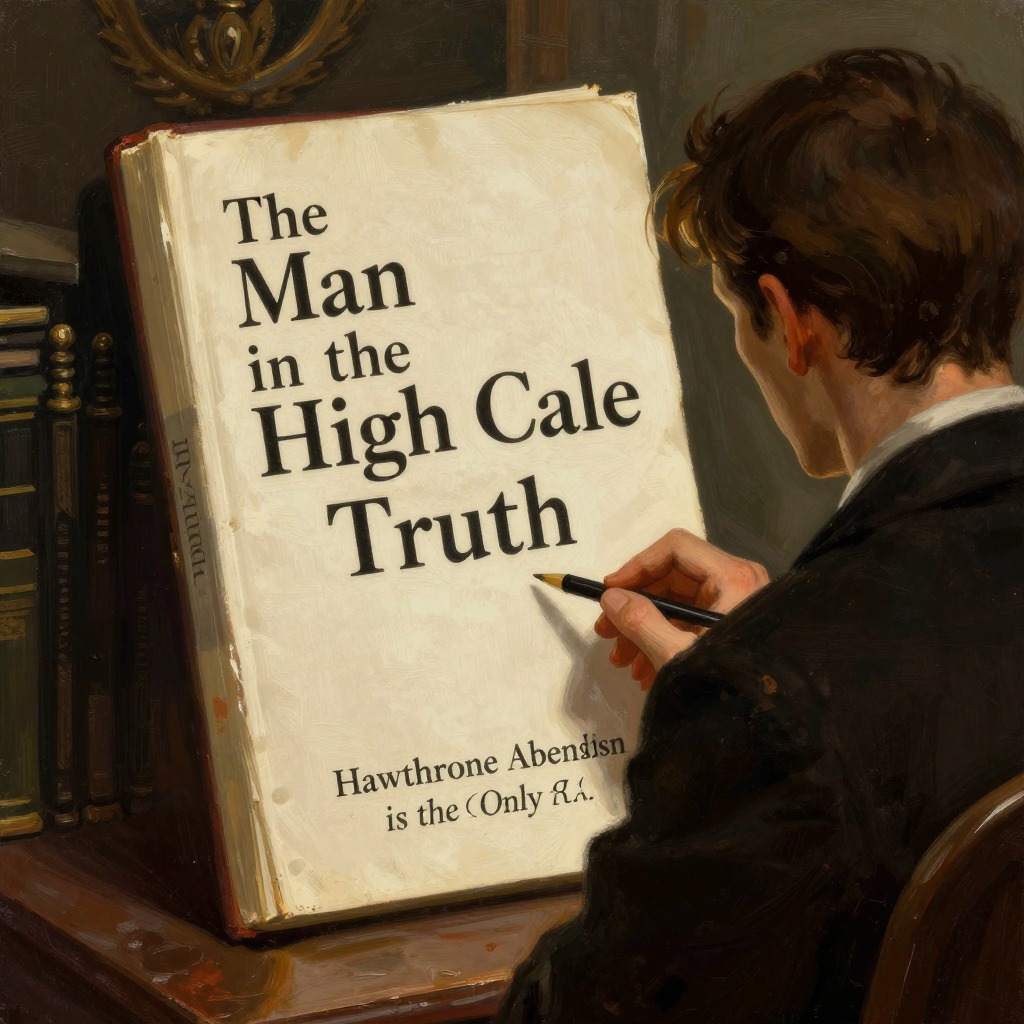
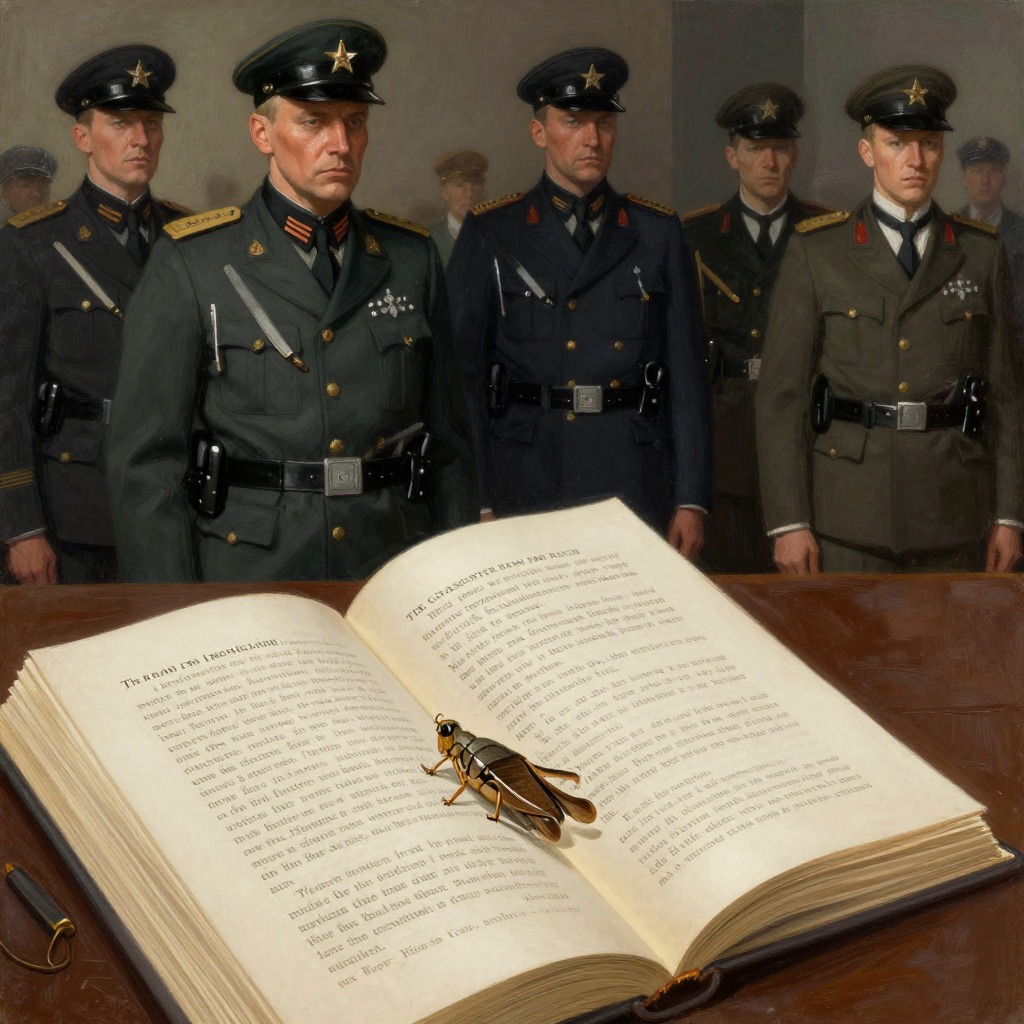
The High Castle is the legendary mountain stronghold of Hawthorne Abendsen, the author of the banned alternate-history novel The Grasshopper Lies Heavy. According to the book's dust jacket and the rumors that circulate around it, the High Castle is a fortress bristling with guns, surrounded by charged barbed wire, and set deep in the mountains, nearly impossible to reach. It is the place where Abendsen, an ex-Marine sergeant wounded in England by a Nazi Tiger tank, wrote his dangerous book—a work so subversive that it is banned throughout the German Reich and its territories. The fortress is thus imagined as both a physical refuge and a symbolic bastion of defiance, the one place where the truth about the world might be safely spoken.
The Legend of the Fortress
The High Castle exists first as a story told about itself. When Juliana Frink reads the back of the book jacket in Canon City, she learns that Abendsen lives in Cheyenne and that his home is "practically a fortress," with guns all over the place. She also hears from others that he is "almost a sort of paranoid," having charged barbed wire around the property and set it in the mountains to make it hard to approach. This reputation is precisely what makes the High Castle a target: the German consul Hugo Reiss, reading the same book, reflects that "the kike keeps himself barricaded. Up in this High Castle. Nobody's fool," and muses that whoever gets in to kill him won't get back out. The fortress is thus a magnet for the very violence it is meant to repel, a place where the Reich's agents imagine they will have to make a final, desperate assault.
The Reality of the House
When Juliana finally arrives at the Abendsen home in Cheyenne, the legend collapses. She finds not a fortress but a single-story stucco house with many shrubs and a garden of climbing roses, with a child's tricycle parked in the long cement driveway. The house is lit up, music and voices drift out, and a party is in progress. The wrought-iron railings on the porch and the ordinary, well-maintained grounds contradict every rumor of paranoid fortification. Abendsen himself explains the transformation: "Yes, we did. But we had to get up to it in an elevator and I developed a phobia." He tells Juliana that he refused to stand in the elevator, insisting that the cable was being hauled up by Jesus Christ, and so he gave up the High Castle and moved back into town. The fortress, it turns out, was abandoned not because the danger passed but because the author's own mind could no longer sustain the pretense of safety.
The Scene of Revelation
The High Castle's true significance lies not in its defenses but in what happens within its walls. It is here that Juliana, having driven all the way from Canon City and having killed the SD agent Joe Cinnadella in Denver to protect Abendsen, confronts the author with the question that has brought her across the country. She demands to know how he wrote his book, whether he used the oracle, and when he deflects, she presses him until Caroline Abendsen reveals the truth: "One by one Hawth made the choices. Thousands of them. By means of the lines." The oracle wrote the book, and the High Castle was its workshop. When Juliana throws the coins herself, she obtains Hexagram Sixty-one, Inner Truth, and declares that the book is true—that Germany and Japan really did lose the war. The fortress, stripped of its guns and wire, becomes the site where the novel's central illusion is both exposed and affirmed, where the fictional world is revealed to be the real one.
Abandonment and Fatalism
The High Castle's abandonment is itself a statement about the impossibility of escape. Abendsen tells Juliana that he and his wife had tried the fortress, with all its weapons and charged wire, and had even written the book's cover to make it seem they were still taking precautions. But he has concluded that "they can get you, if they want to. Charged wire and High Castle or not." His wife Caroline fears that someday someone he invites in will shoot him down while he is philosophizing, and she urges him to at least carry a weapon. He refuses, choosing instead to lean on the oracle when he gets edgy late at night. The High Castle thus represents a failed strategy of resistance, replaced by a quiet, almost serene acceptance of mortality. The fortress that was supposed to protect the truth-teller becomes a monument to the truth that no protection is possible.
Narrative Significance
The High Castle functions as the novel's threshold between worlds. It is the place where the alternate history of The Grasshopper Lies Heavy—a fiction within the fiction—is revealed to be the actual history of the reader's world, and where the novel's own reality is shown to be the illusion. The fortress's transformation from impregnable stronghold to ordinary suburban home mirrors the novel's larger project of dismantling the distinction between the real and the imagined. By the end, the High Castle is less a place than a state of mind: the recognition that the truth, once known, cannot be defended against, only lived with. Juliana leaves the house and walks back down the flagstone path into the shadows, carrying the revelation with her, while Abendsen returns to his guests and his drink, having decided long ago not to let the threat bother him. The High Castle, in the end, is not a fortress at all but a house where a man has made his peace with the world as it is.